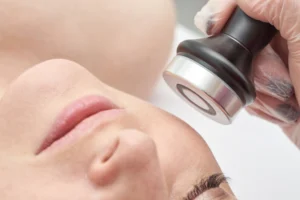

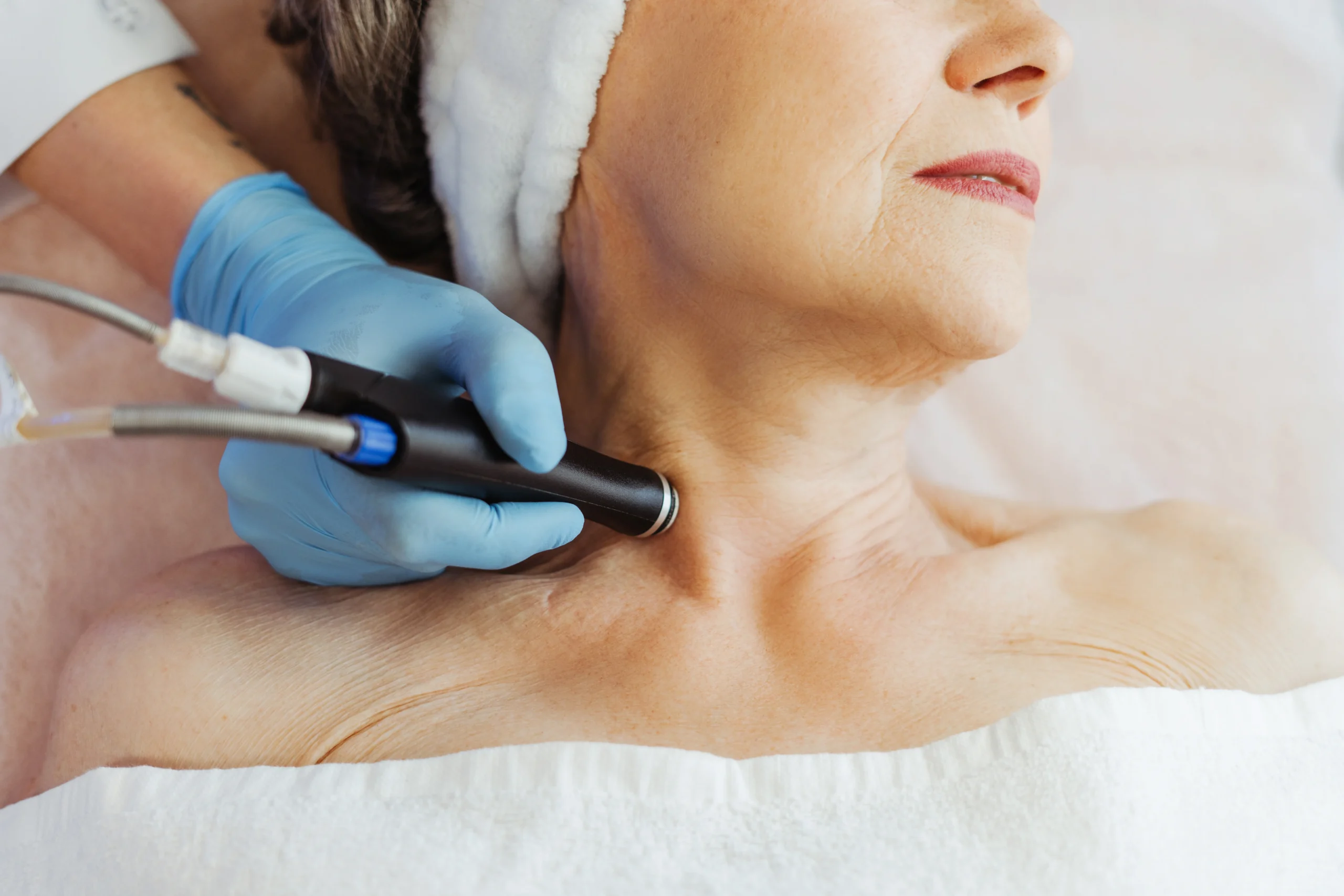
XERF is a specific type of multifrequency monopolar radiofrequency treatment, while traditional radiofrequency treatments describe a broader category of technologies that use RF energy to heat targeted tissue and support collagen remodeling. The main difference is that XERF uses a dual-frequency approach designed to address different tissue depths, while conventional RF systems can use different frequencies, electrode configurations, and energy-delivery methods depending on the device.
If you are researching non-surgical skin tightening, you may have come across terms such as radiofrequency, monopolar RF, bipolar RF, RF microneedling, and XERF. Although these treatments share the use of radiofrequency energy, they are not identical.
Understanding how they differ can help you have a more informed conversation with your skincare professional about which treatment may fit your skin concerns and goals.
What Is Traditional Radiofrequency Skin Tightening?
Traditional radiofrequency skin tightening uses electromagnetic RF energy to create controlled heat within targeted tissue. This thermal effect can support collagen remodeling and may improve the appearance of skin firmness and laxity over time.
RF technology has been used in aesthetic medicine for years. Research has found that different RF approaches can produce measurable improvements in skin laxity, although the results, comfort, treatment depth, and potential side effects depend on the specific technology and treatment protocol.
The important point is that “traditional RF” does not describe one single machine.
Different RF systems may use:
- Monopolar RF
- Bipolar RF
- Multipolar RF
- Different frequencies
- Different electrode designs
- Different cooling systems
- Different energy levels and treatment protocols
Because of these differences, two treatments advertised simply as “RF skin tightening” may provide very different treatment experiences.
How Does Traditional RF Work?
RF energy creates controlled heat in the targeted tissue. The treatment is designed to affect collagen-containing structures and encourage remodeling.
Collagen provides structural support for the skin. As collagen changes with age and environmental exposure, skin can gradually lose some of its firmness and elasticity.
RF treatments aim to use controlled thermal energy to support the skin’s natural remodeling process.
However, the exact depth and distribution of energy depend on the device being used. Monopolar and bipolar systems, for example, deliver RF energy through different electrode configurations.
What Is XERF Structural Skin Tightening?
XERF is a specific RF technology developed for structural skin tightening. According to its manufacturer, XERF is a multifrequency monopolar RF treatment that combines two RF frequencies in its energy-delivery approach.
Ciao Bella describes its XERF service as an advanced dual-frequency treatment designed to firm lax tissue, support collagen synthesis, and improve the appearance of skin tone. The treatment is offered for the full face and neck.
The key distinction is simple:
Traditional RF is a category. XERF is a specific RF technology within that category.
That means comparing XERF with “RF” is similar to comparing a specific model with an entire class of products. To make a useful comparison, you need to know what type of RF system the other treatment uses.
How Is XERF Different From Traditional RF?
The biggest differences involve frequency, energy delivery, treatment depth, and the way the technology is designed to work with different tissue layers.
Does XERF Use Different RF Frequencies?
Yes. XERF uses a dual-frequency monopolar RF approach.
The manufacturer describes XERF as combining different frequencies to deliver energy across multiple tissue levels. This is one of the main technological features that separates it from some conventional RF platforms.
Some conventional RF devices use a single frequency or a different RF configuration. However, because the term “traditional RF” covers many devices, you should always ask which specific technology is being used before comparing treatments.
Can XERF Target Different Tissue Depths?
XERF is designed to deliver energy across shallow, middle, and deeper tissue levels. Its multifrequency approach is intended to provide a broader treatment strategy within the same treatment protocol.
This does not mean that every XERF treatment reaches the exact same depth in every patient. Treatment settings, anatomy, skin characteristics, and clinical protocols all matter.
It is also important not to assume that deeper automatically means better. The appropriate treatment depth depends on the concern being treated and the individual’s skin.
Why Does Frequency Matter in RF Treatments?
Frequency affects how RF energy interacts with tissue.
Different frequencies and delivery systems can produce different patterns of energy distribution and heating. Recent research comparing RF technologies highlights that monopolar and bipolar systems have distinct energy-delivery characteristics, which can influence treatment depth and precision.
XERF’s dual-frequency design is intended to provide a different approach from RF systems that rely on a single frequency.
That distinction is useful when comparing technologies, but it does not mean XERF is automatically the best option for every person.
Is XERF the Same as Monopolar RF?
No, but they are closely related.
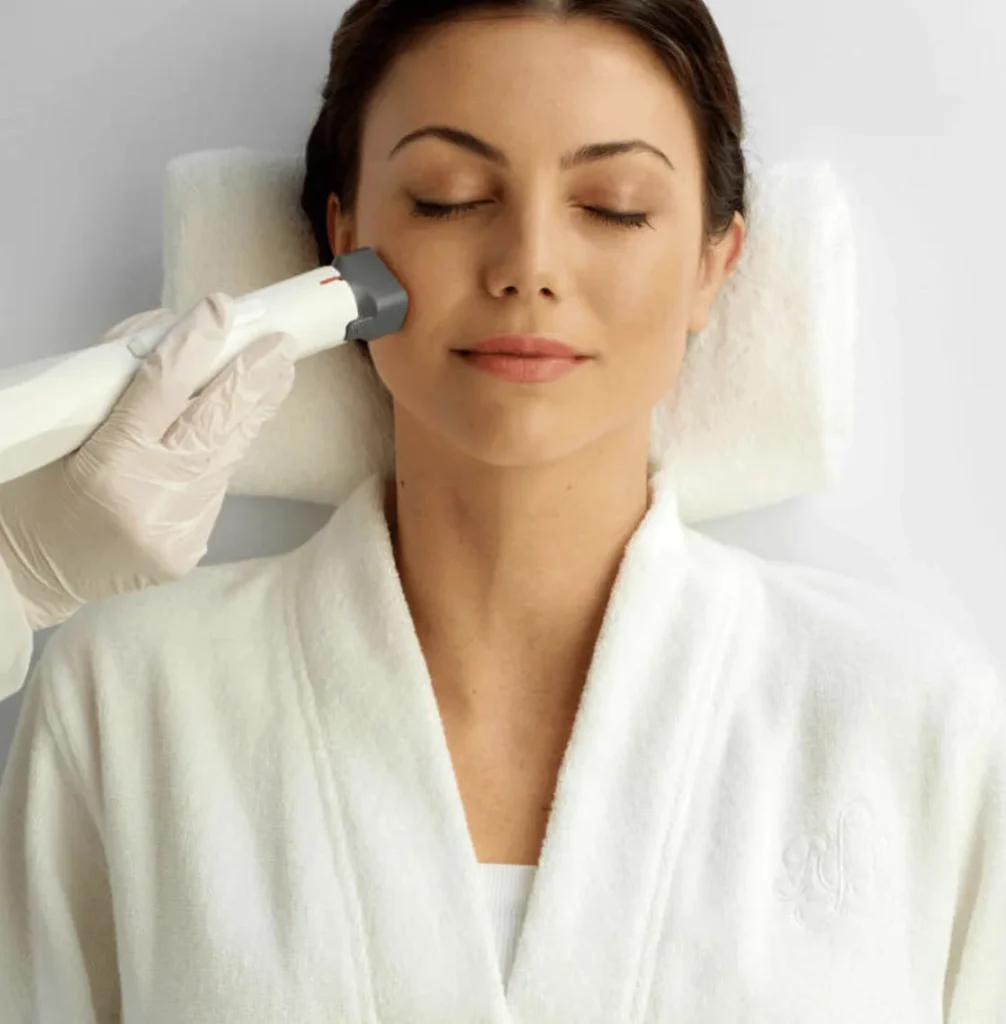
Monopolar RF is a type of radiofrequency delivery. XERF is a specific multifrequency monopolar RF system.
Think of it this way:
Radiofrequency: The broad technology category.
Monopolar RF: One type of RF energy delivery.
XERF: A specific multifrequency monopolar RF platform.
Traditional monopolar RF systems have been used for non-invasive skin tightening for many years. Clinical research supports the use of monopolar and bipolar RF for improving skin laxity, although outcomes differ between devices and treatment protocols.
XERF builds on the monopolar RF approach with its dual-frequency system.
How Does XERF Compare With Bipolar RF?
Bipolar RF uses two electrodes to create the RF pathway between them. This produces a more localized energy distribution compared with the broader pathway associated with monopolar systems.
XERF, in contrast, uses a monopolar configuration with a dual-frequency approach.
This difference can affect how energy is distributed through tissue.
Neither approach is automatically better for every skin concern. Bipolar RF may be useful when more localized energy delivery is appropriate, while a monopolar approach may be selected when a different depth or treatment pattern is desired.
The device, settings, treatment area, and individual skin condition all matter.
Is XERF the Same as RF Microneedling?
No. XERF and RF microneedling use radiofrequency energy, but they deliver it differently.
XERF is a non-invasive RF treatment that does not require needles. Ciao Bella describes the treatment as a non-invasive structural skin tightening service for the face and neck.
RF microneedling combines radiofrequency energy with tiny needles that penetrate the skin. Ciao Bella offers Vivace Fractional RF Microneedling as a separate Med Spa service designed to support collagen production and improve texture, pores, and skin structure.
What Is the Main Difference Between XERF and RF Microneedling?
The simplest difference is the treatment method.
- Non-invasive
- No needles
- Designed for structural skin tightening
- Uses dual-frequency monopolar RF
- Targets the face and neck at Ciao Bella
RF microneedling:
- Uses microneedles
- Delivers RF energy through the needles
- Can address texture and pores as well as skin firmness
- Has a different treatment and recovery experience
If you want RF skin tightening without needles, XERF may be an option worth discussing. If your main concern involves texture, pores, acne scarring, or other concerns that may benefit from microneedling, RF microneedling may be considered instead.
Can XERF Provide Better Results Than Traditional RF?
There is no simple yes or no answer.
XERF has a newer dual-frequency design, but that does not mean it will produce better results than every traditional RF treatment.
The phrase “traditional RF” covers too many different technologies to make a blanket comparison.
For example, one conventional RF device may use a monopolar configuration, while another may use bipolar technology. Treatment frequency, energy settings, cooling, treatment area, and clinical technique can all vary.
Research supports RF as a category for improving the appearance of skin laxity, but studies also emphasize differences between individual RF technologies.
A recent retrospective study of XERF reported improvements in facial skin laxity and several measures of skin quality after treatment, but the researchers noted that larger prospective controlled studies are still needed to confirm those findings.
This is why it is better to ask, “Which technology is appropriate for my skin?” rather than simply asking, “Which treatment is stronger?”
What Skin Concerns Can XERF Address?
XERF is primarily designed for people who want non-surgical skin tightening and rejuvenation.
Ciao Bella identifies the face and neck as the treatment areas and highlights goals such as:
- Improving the appearance of lax skin
- Supporting collagen remodeling
- Firming the jawline and neck
- Refining skin texture and tone
- Supporting a more refreshed appearance
Can XERF Help With a Less Defined Jawline?
It may be considered for people experiencing mild to moderate-looking laxity around the lower face and neck.
Ciao Bella specifically describes XERF as a treatment for face and neck remodeling and tightening along areas such as the jawline, cheeks, and neck.
However, the degree of laxity matters. Non-surgical skin tightening is not a replacement for surgical tissue removal when someone has significant excess skin.
A consultation can help determine whether XERF matches your goals.
How Long Does a XERF Treatment Take?
Ciao Bella lists a treatment time of approximately 45 to 60 minutes for XERF. The spa describes the treatment as a comfortable dual-frequency energy treatment, followed by post-treatment guidance.
The exact experience can vary based on your treatment plan and individual needs.
Ciao Bella also states that a consultation is required before treatment to assess candidacy and develop a personalized plan.
Does XERF Require Needles or Numbing?
According to the XERF manufacturer, the treatment is designed without needles or numbing and with no downtime.
Ciao Bella similarly describes XERF as non-invasive and lists no anesthesia as part of its treatment comparison. It describes the treatment experience as comfortable, with mild and short-lived redness possible afterward.
Individual experiences can vary, so your provider should explain what you can realistically expect before treatment.
Does XERF Have Downtime?
XERF is designed as a non-invasive treatment with minimal to no downtime.
Ciao Bella states that clients can resume daily activities immediately and may experience mild, short-lived redness following treatment.
Even when a treatment has minimal downtime, following professional aftercare instructions is important.
Your provider may recommend specific skincare products, sun protection, or temporary changes to your routine based on your skin and treatment plan.
How Should You Choose Between XERF and Traditional RF?
The right choice starts with identifying your primary skin concern.
Choose Based on Your Treatment Goal
If your main concern is visible skin laxity and you want a non-invasive approach, XERF may be worth discussing.
If your concern is more specific to texture, pores, acne scarring, or resurfacing, another RF technology or a different Med Spa treatment may be more appropriate.
Ask What RF Technology Is Being Used
Do not stop at the term “RF.”
Ask:
- Is the device monopolar or bipolar?
- What frequency does it use?
- What tissue depth is targeted?
- Does it use cooling?
- Does it require needles?
- What type of recovery should I expect?
- How many treatments are typically recommended?
- What results are realistic for my skin?
These questions help you compare actual technologies rather than comparing broad marketing terms.
Consider Your Skin and Medical History
Your provider should consider your skin condition, treatment history, goals, and relevant health factors before recommending an energy-based treatment.
Ciao Bella states that treatment recommendations are made following an appropriate consultation and that risks, benefits, contraindications, and expected outcomes vary by individual.
Why Consider XERF at Ciao Bella in Islamorada?
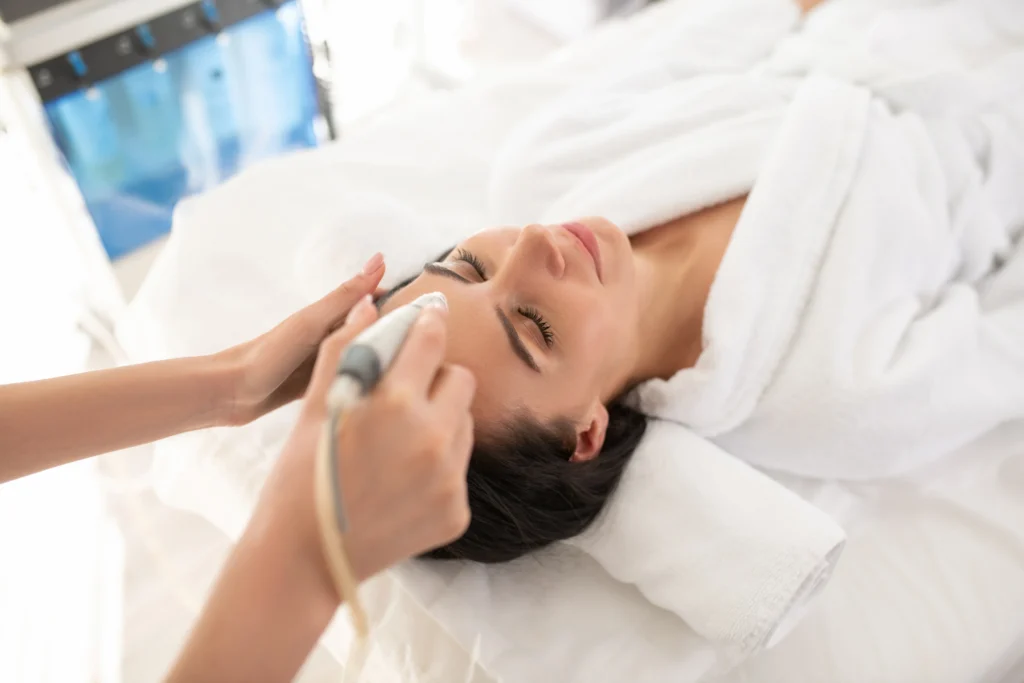
Ciao Bella offers XERF as part of its Med Spa services alongside treatments such as Vivace Fractional RF Microneedling, Ultra MD Laser Resurfacing, and Oxylight Facial treatments.
This allows the treatment discussion to focus on your specific skin goals instead of treating every concern with the same procedure.
Ciao Bella’s XERF service is designed for the full face and neck, with a listed treatment duration of 45 to 60 minutes.
Why Does Personalization Matter?
Skin tightening is not one-size-fits-all.
Two people can have similar concerns but need different treatment approaches because of differences in skin quality, degree of laxity, previous procedures, and desired results.
A professional consultation helps determine whether XERF, another RF treatment, or a combination of skincare services makes the most sense.
Frequently Asked Questions About XERF vs Traditional RF
What is the main difference between XERF and traditional RF?
XERF is a specific multifrequency monopolar RF system, while traditional RF refers to a broad category of radiofrequency treatments. XERF’s dual-frequency approach is one of its main distinguishing features.
Is XERF better than traditional RF?
Not necessarily. XERF and traditional RF cannot be compared as equal categories because traditional RF includes many different devices. The right choice depends on the specific technology, treatment goal, skin condition, and provider’s recommendation.
Is XERF a type of radiofrequency treatment?
Yes. XERF is a specific type of monopolar radiofrequency treatment. Its distinguishing feature is its multifrequency approach.
What is the difference between XERF and bipolar RF?
XERF uses a multifrequency monopolar RF approach, while bipolar RF uses two electrodes to create the RF pathway between them. This produces different patterns of energy distribution and treatment depth.
Is XERF the same as RF microneedling?
No. XERF is non-invasive and does not use needles. RF microneedling combines microneedles with RF energy and therefore has a different treatment mechanism and recovery experience.
Can XERF tighten loose skin?
XERF is designed to improve the appearance of skin firmness and laxity through controlled RF energy and collagen remodeling. Ciao Bella offers it for face and neck skin tightening.
Does XERF require downtime?
XERF is designed to have minimal to no downtime. Ciao Bella notes that clients can resume daily activities immediately, although mild, short-lived redness may occur.
How long does a XERF session take?
Ciao Bella lists XERF sessions at approximately 45 to 60 minutes.
Can XERF replace a facelift?
No. XERF and surgical facelifts work differently. XERF is intended as a non-surgical approach to skin tightening, while a facelift physically repositions tissue and removes excess skin. People with significant laxity may require a surgical consultation.
How do I know whether XERF is right for me?
A consultation is the best starting point. Your provider can evaluate your skin, discuss your concerns, explain available RF technologies, and determine whether XERF fits your goals.
Conclusion
So, what is the difference between XERF and traditional radiofrequency treatments? XERF is a specific dual-frequency monopolar RF technology, while traditional RF is a broad category that includes multiple energy-delivery systems and devices.
The most important distinction is not simply whether a treatment uses radiofrequency. It is how the RF energy is delivered, what technology is used, what tissue is being targeted, and what your treatment goals are.
XERF may be a compelling option for people looking for non-invasive face and neck skin tightening without needles and with minimal downtime. At Ciao Bella in Islamorada, it is offered as part of a broader Med Spa approach that includes other advanced skin treatments.
If you are comparing XERF with another RF treatment, ask about the specific device, frequency, treatment depth, expected recovery, and realistic results. A personalized consultation can help you choose an approach based on your skin rather than simply choosing the newest or most heavily marketed technology.